Matt Bailey
Key takeaways
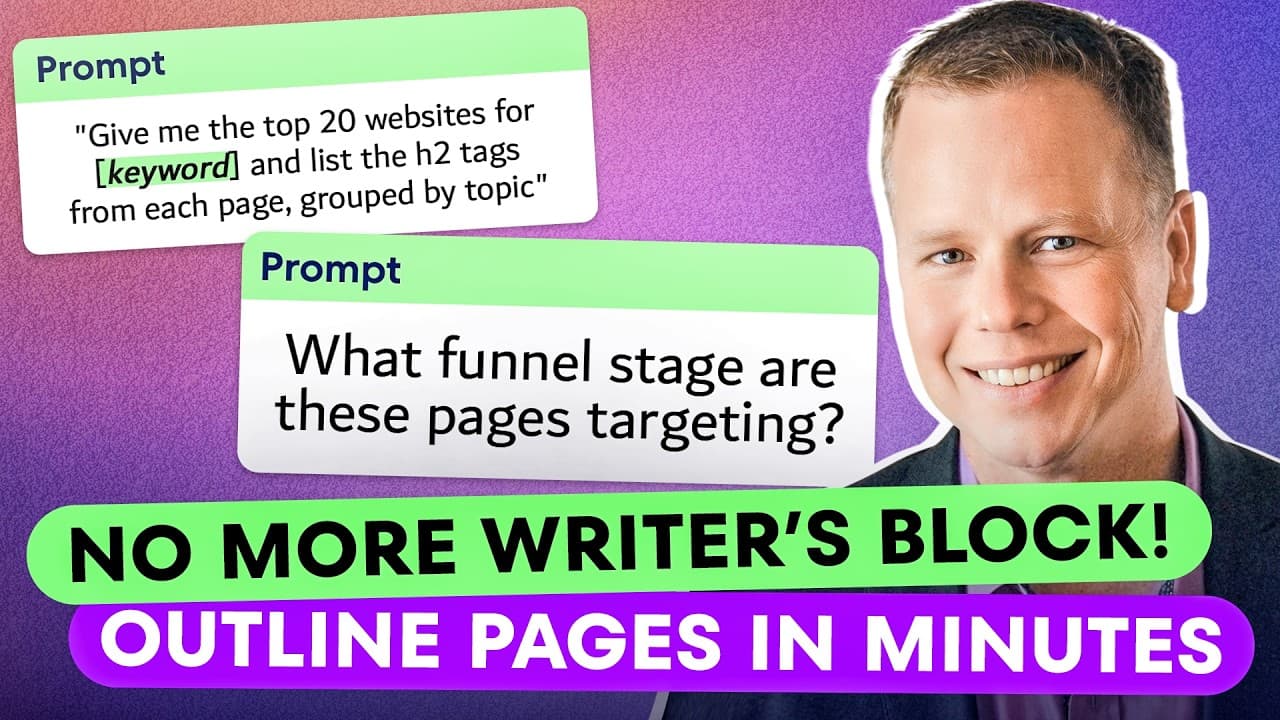
- 1:50AI competitor research that once required manual spreadsheet building can now be completed in moments using ChatGPT prompts to extract and summarize the top 10–20 ranking pages.
- 3:03Organize competitor data by topic and heading structure (H1s, H2s, H3s) to identify topical coverage gaps and ensure your content demonstrates expertise in the field.
- 4:03Define page purpose (informational, transactional, or lead-generation) before outlining, because the page structure, CTAs, and internal linking strategy must align with that goal.
- 5:03SE Ranking's Content Editor enables you to select or exclude specific competitor topics during outline generation and provides live keyword density and E-E-A-T scoring to guide content development.
- 6:06All AI-generated content must be proofread, fact-checked, and edited by someone with domain knowledge before publication to avoid uploading incorrect or misleading information.
In Matt Bailey's words
“You may get a little queasy at using AI to write your content, and that's okay. It means that you value high-quality content and respect your visitors and your craft, which is the best place to start.”
“The primary goal of using AI with content according to Google's policy is to create content that is helpful and educational that meets the E-A, expertise, experience, authoritativeness, and trustworthiness.”
“Before AI, SEO professionals would create spreadsheets of top ranking competitor pages breaking out the page titles, headings, alt attributes, and other content by comparing and evaluating competitor content. Now with AI, this one-time intensive step is reduced to mere moments.”
“You had better be knowledgeable about your topic. Otherwise, you might be responsible for uploading wrong, incorrect, or misleading information. Anytime that you use AI to fully generate an article, you must proof and edit the result.”